If the running man is the shuffle's engine, the T-step is its steering. It lets you glide sideways across the floor, change direction and add flicks and kicks. Wikipedia's summary of the dance describes the T-step as a variation of the jazz tick-tock and identifies it, together with a variation of the running man, as the core of the Melbourne shuffle. This guide explains how to break the T-step down, add kicks, travel in both directions and link it to the running man.
T shape
Of the feet
Swivelling foot and lifted leg
Both sides
Practise each way
Most people have a weaker side
Slow first
Then build speed
Use the tempo trainer
The idea behind the T-step
In the T-step, one foot stays on the floor and swivels, alternately pivoting on the heel and the toe. Each swivel moves you a little sideways. Meanwhile the other leg lifts and kicks out to the side or turns in and out. From above, the standing foot and the lifted leg form a T shape, which gives the step its name.
Step by step, travelling left
We'll travel to the left with the left foot as the standing foot and the right leg lifted.
- Stand on your left foot, knee soft, toes pointing forward. Lift your right knee slightly, with your right foot off the floor near your left ankle.
- Swivel the left toes out to the left, pivoting on the left heel. Your left foot now points out to the left.
- Swivel the left heel out to the left, pivoting on the ball of the foot, so the foot points forward again. You have moved a few centimetres to the left.
- Repeat the toe-out, heel-out swivel to keep travelling left.
- Move the right leg in time with each swivel: as your left toes turn out, the right knee turns in; as your left heel turns out, the right leg kicks or opens out to the right.
To travel right, swap everything: stand on your right foot, swivel the right toes and heel out to the right, and move the left leg.
Getting the balance
The T-step puts all your weight on one leg, which takes practice. To build balance:
- Hold something. Practise the swivel holding the back of a chair or a wall.
- Keep your standing knee soft. A locked knee makes swivelling jerky.
- Stay on the ball of the foot when you pivot the heel.
- Keep your core engaged and your chest upright.
Start with the swivel alone, without lifting the other leg high. Once you can travel a metre smoothly, add the leg movement.
Adding kicks
Kicks give the T-step its energy. Common variations include:
- Side kick. As the standing heel swivels out, kick the lifted leg straight out to the side.
- Flick. A small, quick flick of the lower leg out and back.
- Knee in, kick out. Turn the lifted knee in across your body, then kick out to the side, in time with the toe-out and heel-out swivels.
- Low kicks. Keep kicks low and small for speed and control.
Match each kick to a beat. Counting "toe, heel, toe, heel" in time with the kick drum helps.
Putting it on the beat
A common way to start is one swivel per beat: toes out on one, heels out on two, toes out on three, heels out on four. With kicks, the leg opens on every heel swivel. As you speed up, it can feel more natural to fit two swivels into each beat.
Use our tempo trainer to measure a track's tempo and practise from a slower speed. If you lose the beat, drop back a rung.
Linking the T-step and running man
Shuffle dancers move fluidly between the running man and the T-step. A simple link:
- Do four running man cycles.
- On the last knee lift, keep the knee up and start swivelling the standing foot sideways, turning the knee lift into a T-step.
- Do four T-step swivels travelling sideways.
- Bring the lifted leg down underneath you and start a running man again.
Practise the switch slowly until it feels natural, then try switching on different counts and in both directions. Our guide to spins and transitions has more ideas.
Arms in the T-step
Arms help balance and add style. Try:
- arms extended to the side for balance at first;
- forearms swinging in time with the kicks;
- one arm pointing in the direction of travel;
- arm movements that mirror the kicking leg.
Keep them relaxed. As with the running man, add arms only once the footwork is solid.
Common mistakes
- Hopping. The standing foot should swivel, staying in contact with the floor.
- Swivelling from the hip. The movement comes from the foot and ankle, with the knee following.
- Locked standing knee. Keep it soft.
- Big kicks too early. Big kicks throw you off balance. Keep them small until your swivel is smooth.
- Only practising one side. Most people favour one direction, so give the other side extra work.
Floors and shoes
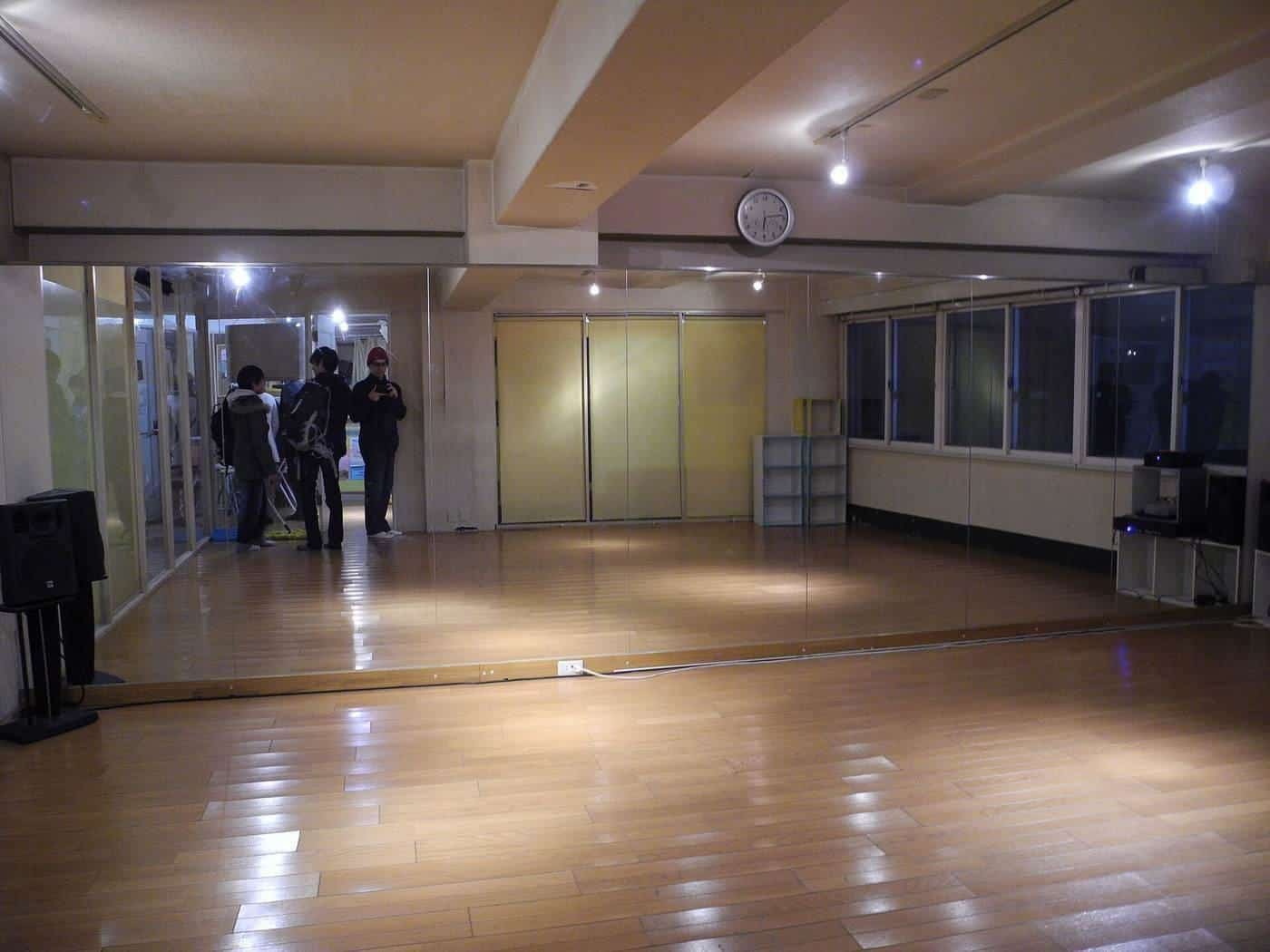
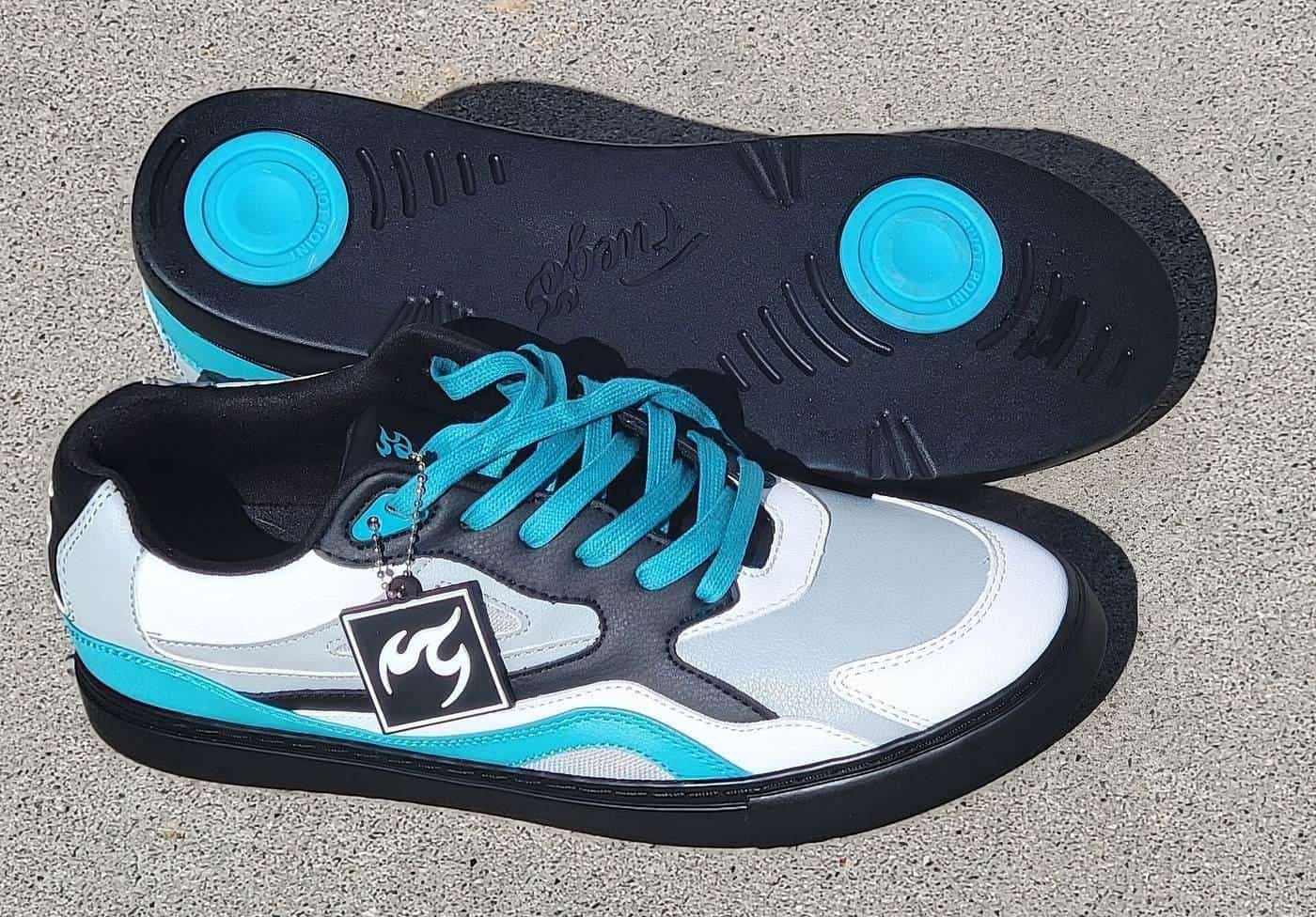
The T-step depends on swivelling, so floor and shoe choice matter even more than for the running man. A smooth floor and shoes with a fairly flat, smooth sole make pivoting easier, while sticky soles on grippy floors can put strain on your knee. Our guide to shoes and floors covers this in detail.
Practice drills
Swivel walk. Travel across the room using swivels only, then back the other way.
Kick count. Do eight T-steps with kicks to the left, eight to the right, then eight running men.
Direction changes. Travel four swivels left, then change to four swivels right without stopping.
Film and review. Record from the front and check that your standing foot is swivelling, not hopping.
Troubleshooting your T-step
"I'm not moving sideways." Make sure you're alternating toe and heel swivels. If you only swivel the toes, your foot just rotates in place. Exaggerate the movement at first, turning the toes and heel out as far as is comfortable.
"I keep putting my other foot down." That's normal while your balance develops. Lower the lifted leg so it hovers just off the floor, and touch it down briefly whenever you need to. Over time, you'll need it less.
"My standing knee feels strained." Check your floor and shoes, and make sure your knee is soft and tracking over your toes. Swivelling on a sticky surface can twist the knee. If you feel pain, stop and rest, and consider seeing a health professional if it continues.
"My kicks are out of time." Slow down and say the counts out loud: "toe, heel, toe, heel", kicking on each "heel". Try kicking on every second swivel before kicking on every one.
"It feels lopsided." Almost everyone has a stronger side. Start each practice session with your weaker side while you're fresh, and do a few extra repetitions on it.
Building endurance
The T-step is tiring because you're balancing on one leg for long stretches. Build endurance by practising in short sets with rest in between, gradually increasing the number of swivels per set over several weeks. Mixing T-steps with running men also spreads the work between both legs.
Key points
- The T-step uses a swivelling standing foot to glide sideways while the other leg kicks.
- Build balance by practising the swivel alone, holding a support if needed.
- Add small kicks in time with the heel swivel, then build speed.
- Practise both directions and link the T-step to the running man.
- Smooth floors and suitable shoes make swivelling easier and kinder to your knees.
Frequently asked questions
What is the T-step?
A move where one foot swivels on its heel and toe to travel sideways while the other leg lifts and kicks out. From above, the feet make a T shape.
Is the T-step harder than the running man?
Many people find it harder at first because it needs balance on one leg and a swivelling standing foot. Practise slowly and hold something for balance at first.
Where does the T-step come from?
Wikipedia describes it as a variation of the jazz tick-tock, combined in the shuffle with a variation of the running man.
Which way should I travel?
Practise both directions. Most dancers have a stronger side, so give the weaker side extra repetitions.
How do I link the T-step to the running man?
Finish a T-step with the kicking leg coming back in, and use that moment to start a running man knee lift on the same leg. Practise the switch slowly.
Sources and further reading
Facts on this page were checked against these primary and official sources. Conditions change — confirm before you travel or buy.
- Melbourne shuffle — Wikipedia
- Exercise safety — Physical Activity Australia